📖 Table of Contents
- What does it mean to “use” protein
- Where the 20 to 25 gram rule came from
- What the 2023 Trommelen study changed
- What newer research means for your meals
- Practical rules for protein per meal
- Protein per meal targets by bodyweight
- Complete vs incomplete protein
- Common protein sources
- Men, women, and older adults
- Whey, casein, blends, and protein snacks
- When a higher protein diet feels uncomfortable
- Protein picks for different routines
- Protein and kidney health
- Frequently Asked Questions
- Where to buy protein supplements
- Bottom line
The 20 to 25 gram protein rule is easy to remember. That’s probably one reason it has stuck around for so long.
Real meals aren’t that neat. You might eat 25 grams at breakfast, 40 at lunch, and 60 at dinner. Or you might only have two real chances to eat all day. That doesn’t mean everything above a certain number suddenly stops being useful.
A better way to plan protein per meal is to start with your full day. Then look at how many meals you actually eat, your body size, your training, and the protein sources you’re using. The science helps set the range. Your routine decides what that range looks like on the plate.
How Much Protein Per Meal Can You Actually Use
There isn’t a clean point where your body reaches 25 grams and stops handling the rest. The number people usually quote comes from studies looking at how much protein maximized a short term muscle protein synthesis response after training.
That’s useful information, but it’s a narrower question than “How much protein can my body use?” Digestion and absorption continue beyond that short measurement window. Larger meals also contribute to whole body protein turnover, not just one muscle protein measurement. (1)
So if your dinner has 45, 60, or more grams of protein, you don’t need to cut the portion down just to stay under an old per meal number. The better target is the amount that helps your full day add up and fits how you normally eat.†
What Does It Mean to “Use” Protein
This is where the protein per meal conversation can get confusing.
First, you digest protein. Enzymes break it into smaller peptides and amino acids. Those amino acids are absorbed and become available to tissues throughout the body. Digestion speed affects how quickly they appear in circulation, but speed alone doesn’t tell us how strong the muscle building response will be. (2)
Muscle protein synthesis, or MPS, is one place those amino acids can go. It’s the process of building new proteins inside skeletal muscle. Resistance training makes muscle more responsive to amino acids during recovery, which is why protein around training gets so much attention. (3)
You’ll also see studies report myofibrillar protein synthesis. That’s more specific. MPS is the broader umbrella. Myofibrillar protein synthesis looks at the contractile protein fraction inside muscle, including proteins involved in muscle structure and force production. That’s why it’s often used in resistance training research focused on muscle remodeling and hypertrophy. (3,4)
The rest of the amino acids haven’t disappeared. Dietary amino acids also support protein synthesis throughout the body, including tissues outside skeletal muscle. Some are oxidized as part of normal amino acid metabolism as well. (5)
Plain English: When a study says a dose “maximized MPS,” it means muscle building didn’t rise further during that study’s measurement window. It doesn’t mean your digestive system stopped absorbing protein, and it doesn’t mean every gram above that dose was wasted.†
Where Did the 20 to 25 Gram Protein Rule Come From
The rule grew out of several small post workout studies.
One influential 2009 trial included only six healthy young men. They performed leg based resistance exercise, then consumed 0, 5, 10, 20, or 40 grams of whole egg protein on separate visits. During the four hour measurement period, MPS rose up to 20 grams. Forty grams didn’t raise MPS further, and leucine oxidation increased. (6)
That study helped establish the idea that around 20 grams could maximize the acute response in young men after that type of workout. It didn’t test women, older adults, mixed meals, larger athletes, or what happened over the rest of the day.†
A 2016 trial gave the story another layer. Thirty young resistance trained men completed a whole body workout, then consumed either 20 or 40 grams of whey. Myofibrillar protein synthesis was higher after 40 grams. The researchers also split the men into lower and higher lean body mass groups, but lean body mass didn’t explain the difference. (7)
Then there’s meal distribution. A 2013 study followed 24 healthy trained men for 12 hours after resistance exercise. Everyone consumed 80 grams of whey, but the pattern changed. They had eight 10 gram servings, four 20 gram servings, or two 40 gram servings. Four 20 gram servings produced the highest myofibrillar protein synthesis response in that specific recovery period. (8)
These studies don’t give us one universal protein per meal number. They show that the answer changes with the population, workout, protein source, dose, meal pattern, and how long researchers follow the response.†
What the 2023 Trommelen Study Changed
Most of the older protein dose studies used moderate servings and relatively short measurement windows. Trommelen and colleagues deliberately tested a much larger serving and followed it for much longer.
The trial included 36 healthy, recreationally active men between 18 and 40 years old. After a full body resistance workout, they consumed 0, 25, or 100 grams of labeled milk protein. Researchers then tracked digestion, amino acid availability, and protein synthesis for 12 hours. (9)
The 100 gram serving produced a larger and more prolonged anabolic response than 25 grams. Amino acids from the meal continued appearing in the blood throughout the 12 hour period. More of those dietary amino acids were also incorporated into muscle protein. (9)
The study also looked beyond one MPS number. The larger serving increased whole body protein net balance along with mixed muscle, myofibrillar, connective tissue, and plasma protein synthesis. Amino acid oxidation rose only slightly compared with the much larger protein synthetic response. (9)
For a customer trying to plan real meals, that’s the useful part. A larger protein meal can keep feeding amino acids into the system for many hours. That makes a 50 or 60 gram meal much easier to defend when your schedule naturally pushes more of your daily protein into fewer meals.†
The limits still matter. Every participant was a man in that restricted age window, the protein was milk protein in a drink, and the test happened right after resistance exercise. The study tells us a lot about how large protein doses are handled in that setting. It doesn’t tell us the ideal long term meal size for every woman, older adult, plant based eater, or person who isn’t training.†
What Newer Research Means for Your Meals
Do you need to split protein across five or six meals a day?
Probably not if three good meals fit your schedule better.
A 2025 trial compared three versus five protein rich meals per day in young resistance trained men. Both groups ate similar daily protein and followed resistance training for eight weeks. Both improved lean mass, muscle size, and strength. The five meal group didn’t show a significant advantage. (10)
That doesn’t make meal frequency irrelevant. It shows there is room to build the plan around your day instead of forcing extra meals that you won’t stick with.
What if you eat mostly plant protein?
A 2025 controlled feeding study included healthy young men and women eating either vegan or omnivorous diets. Researchers also compared a more even protein pattern with a more skewed one. Daily myofibrillar protein synthesis was similar across the four groups during the nine day resistance training intervention. (11)
The diets were controlled and protein intake was adequate. That tells us a well planned plant based diet can support daily muscle protein remodeling without every meal looking identical to an omnivorous one.
Does protein source matter more as you get older?
It may. A 2026 meta analysis found only small overall differences in MPS between plant and animal proteins. In adults 65 and older, the pooled estimate leaned more toward animal protein. The authors also noted that the plant protein evidence was still limited and varied across sources. (12)
For older adults, that puts more attention on protein quality and the amount eaten at each meal, not just the daily total.
Practical Rules for Protein Per Meal
- Start with the daily target. A large resistance training meta analysis found that gains in fat free mass tended to level off around 1.62 g/kg/day on average. The confidence interval was wide, so this works best as a reference point rather than a perfect number for everyone. (13)
- Use the per meal number as a starting point. A review focused on protein distribution proposed about 0.4 g/kg per meal when daily intake is around 1.6 g/kg. That gives you a useful target to build around without treating it as a ceiling. (14)
- Make each meal count. Several meaningful protein servings can give you repeated opportunities to stimulate MPS. Larger meals still contribute to the daily total and can stay anabolic for hours. (8,9)
- Look at the source, not just the grams. Essential amino acids, leucine, digestibility, and protein quality can change the muscle response. This matters most when meals rely heavily on plant proteins or collagen. (12)
Protein Per Meal Targets by Bodyweight
The first column gives a 0.3 to 0.4 g/kg meal anchor. The other columns show what an example daily intake of 1.6 g/kg looks like when it’s divided across two, three, or four meals. (13,14)
| Bodyweight | 0.3 to 0.4 g/kg meal anchor | 3 meals/day | 4 meals/day | 2 meals/day |
|---|---|---|---|---|
| 132 lb / 60 kg | 18 to 24 g | 32 g | 24 g | 48 g |
| 165 lb / 75 kg | 23 to 30 g | 40 g | 30 g | 60 g |
| 198 lb / 90 kg | 27 to 36 g | 48 g | 36 g | 72 g |
| 231 lb / 105 kg | 32 to 42 g | 56 g | 42 g | 84 g |
Complete vs incomplete proteins: practical differences
Protein grams tell you quantity. The amino acid profile tells you more about quality.
A complete protein supplies all nine essential amino acids in useful proportions. Whey, casein, eggs, dairy, meat, fish, and soy are common examples. Plant proteins vary more in digestibility and essential amino acid profile. (12)
The word incomplete can make plant protein sound worse than it is. Many plant foods still contain all nine essential amino acids. One or more may simply be present in a lower amount. A varied diet can fill those gaps across the day.†
A 2024 study in healthy middle aged women compared meals built from complete animal protein, complementary plant proteins, and plant proteins that became complementary across the day. The three moderate protein patterns produced similar 24 hour MPS rates in that small study. (15)
Collagen is worth separating from the rest. It contributes protein, but its essential amino acid profile is very different from whey. In a direct comparison, whey produced a stronger myofibrillar protein synthesis response than collagen at the same protein dose. (16)
Common Protein Sources in Real Meals
Exact values change with brand, portion size, and preparation. USDA FoodData Central is useful when you want to check a specific food. (17)
| Source | Typical protein per serving |
|---|---|
| Chicken breast, 4 oz cooked | About 35 g |
| 3 large eggs | About 18 to 19 g |
| Greek yogurt, 1 cup | About 18 to 23 g |
| Cooked lentils or beans, 1 cup | About 15 to 18 g |
| Whey protein, 1 scoop | Usually 20 to 30 g |
Does Protein Per Meal Change for Men, Women, or Older Adults
Body size, age, training status, meal count, and daily intake usually tell you more than a flat “men’s” or “women’s” protein number.
Women who train
A study in 24 resistance trained women compared 15, 30, and 60 grams of whey after two whole body resistance sessions. Thirty and 60 grams increased myofibrillar protein synthesis over 24 hours. Fifteen grams did not. The study found no significant difference between the 30 and 60 gram responses. (18)
Remember what that outcome means. The researchers measured the myofibrillar fraction, the contractile proteins inside muscle. It’s a focused measure of muscle remodeling, not every way the body can use the protein from that meal.
For a woman who trains and eats three meals, a 30 to 45 gram meal can fit comfortably into a higher protein day. Body size and the full daily target still give that number its context.
Men who train
Most of the dose response work has been done in young men. That includes the 20 versus 40 gram whey study and the 100 gram Trommelen trial. Those studies show that useful post workout doses can extend well beyond 20 grams, depending on the protocol. (7,9)
In practice, body size and daily intake explain a lot of the difference between one person’s meals and another’s. A larger daily target naturally pushes each meal higher when meal frequency stays the same.
Older adults
Age can change how strongly muscle responds to a smaller protein dose. In pooled data from healthy men, the estimated protein dose associated with maximal post meal MPS was about 0.40 g/kg in older men and 0.24 g/kg in younger men. (19)
Research in overweight postmenopausal women points in the same direction. Thirty five and 60 grams of whey increased myofibrillar protein synthesis more than 15 grams. Sixty grams didn’t outperform 35 grams in that study. (20)
That makes very small protein servings less useful as a default with age. A more substantial amount at each main meal gives the muscle a stronger amino acid signal and makes the daily target easier to spread out.
Whey, Casein, Blends, and Protein Snacks
Once you know roughly how much protein you want at a meal, the supplement choice gets simpler.
Whey protein
Whey gives you a complete, leucine rich protein in a small serving. A 2025 systematic review found that whey combined with exercise increased MPS across the included trials. Many of those studies used 20 to 40 gram doses around resistance training. (21)
Whey concentrate keeps more lactose, fat, and carbohydrate. Isolate is filtered further. Hydrolyzed whey is partially broken into smaller peptides. The best fit usually comes down to tolerance, macros, taste, and price.†
Casein protein
Casein is another complete dairy protein, but it digests more slowly. That makes it useful before a longer gap between meals or when you want a thicker shake. In one human study, whey and casein produced similar overall myofibrillar MPS responses over six hours after resistance exercise, despite different amino acid patterns in the blood. (22)
Protein blends
Blends can combine whey, casein, egg, plant proteins, or collagen. Read the source list along with the total grams. Two shakes can both say 25 grams of protein while giving you very different amino acid profiles.†
Protein bars and snacks
Bars make the most sense when convenience is the problem. They can cover the gap between lunch and dinner, travel well, and don’t require a shaker. Protein sources and sweeteners are worth checking because both can affect the nutrition profile and individual GI tolerance.†
When a Higher Protein Diet Feels Uncomfortable
If protein intake goes up and your stomach starts pushing back, the useful question is usually what part of the routine is bothering you?
For some people, it’s a large meal. For others, it’s lactose, sugar alcohols, several shakes in one day, or simply eating more food than they’re used to. In one study of collegiate football players, GI complaints were common and athletes who reported protein supplement use also reported higher GI symptom scores. The study was observational, so it doesn’t show that protein supplements caused the symptoms. (23)
This is where format matters. A different protein source, smaller servings, or digestive support may make the same daily target easier to tolerate.†
Where Thorne Protein Optimizer fits

Supplement facts
| Ingredient | Amount Per Serving |
|---|---|
| Mycohsa™ Probiotic Blend | 1 billion CFUs 21 mg |
| Saccharomyces boulardii 16mxg™, Lactobacillus acidophilus 16axg™, Lactcaseibacillus rhamnosus 18fx™, Bifidobacterium breve 19bx™, Amylase | |
| Bacillus coagulans SNZ 1969®†† | 2 billion CFUs 20 mg |
Thorne Protein Optimizer fits the person who’s already eating a higher protein diet and wants extra digestive support. One capsule combines the Mycohsa probiotic blend, amylase, and Bacillus coagulans SNZ 1969®.†
There is human research showing that specific probiotic strains can influence how amino acids appear in the blood. In resistance trained men consuming whey, Bacillus coagulans Unique IS-2 increased total plasma free amino acids by 16.1% versus placebo after 60 days. BCAAs also increased in the intent to treat analysis. (24)†
That result belongs to the Unique IS-2 strain. Thorne uses SNZ 1969, so the study is useful as category context rather than direct product evidence.
A 2026 trial adds another piece. Male athletes on a high protein diet took Bifidobacterium longum BB536 or placebo for four weeks. The full group didn’t show broad GI improvements, but certain microbiota defined subgroups responded differently. (25)
That’s a good way to think about probiotics in general. They may be useful, but the strain and the person both matter.†
Thorne also includes amylase. Amylase helps digest carbohydrate, which fits the reality that most high protein meals also contain carbs and other foods.†
Protein Picks for Different Routines
These four options can all add a meaningful amount of protein to the day, but they aren’t interchangeable. The biggest differences come from the protein sources, how much of the formula is disclosed, the calorie and carbohydrate load, and how the product fits into an actual meal.
Precision Protein by Hi-Tech Pharmaceuticals

Supplement facts
| Ingredient | Amount Per Serving |
|---|---|
| Calories | 130 |
| Total Fat | 2g |
| Saturated Fat | 1g |
| Trans Fat | 0g |
| Cholesterol | 50mg |
| Sodium | 100mg |
| Total Carbohydrate | 2g |
| Sugar | 1g |
| Protein | 25g |
| Ingredients: Hydrolyzed Whey Protein Phospholipid Matrix, Cocoa (Processed With Alkali), Natural And Artificial Flavors, Lecithin, Creamer (Sunflower Oil, Xanthan Gum, Cellulose Gum), Naturally Sweet™ (Erythritol, Tagatose, Maltose, Xylitol, Sucralose), Enzymes |
Precision Protein provides 25 grams of protein in a 130 calorie scoop, with 2 grams of fat and 2 grams of carbohydrate.† Its protein comes from a Hydrolyzed Whey Protein Phospholipid Matrix.
That makes it the most straightforward muscle-focused option in this group. If you’re trying to bring a breakfast from 15 grams of protein closer to 35 or 40 grams, add protein after training, or raise a meal without adding much food volume, the formula fits that job well.†
The rest of the label matters too. Precision includes lecithin, a creamer system, sweeteners, and enzymes. The sweetener system includes erythritol, tagatose, maltose, xylitol, and sucralose. If sugar alcohols already bother your stomach, that’s worth considering before making it a multiple-shake-per-day protein.†
For someone primarily focused on complete protein and muscle support, Precision is the easiest formula here to understand.†
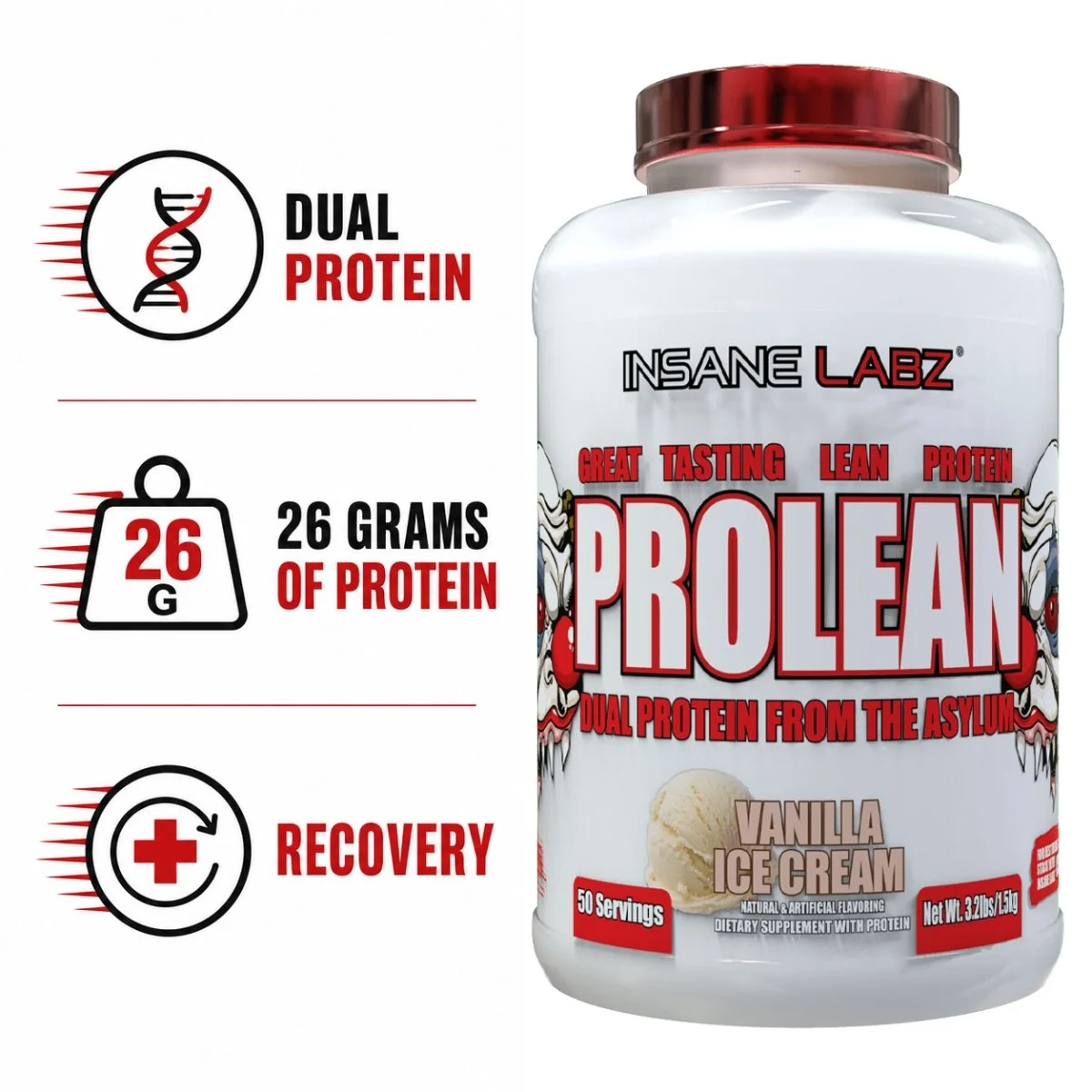
ProLean Protein by Insane Labz
Supplement facts
| Ingredient | Amount Per Serving |
|---|---|
| Calories | 100 |
| Total Fat | 0g |
| Saturated Fat | 0g |
| Trans Fat | 0g |
| Cholesterol | 2mg |
| Sodium | 160mg |
| Total Carbohydrate | 0g |
| Dietary Fiber | 0g |
| Total Sugar | 0g |
| Protein | 26g |
| Prolean Protein Matrix | 28g |
| Premium Hydrolyzed Bovine Collagen Protein, Instant Whey 80% Concentrate |
ProLean is positioned as a lean, low-calorie protein option. One scoop provides 26 grams of protein for 100 calories, with 0 grams of fat and 0 grams of carbohydrate.† The 28 gram ProLean Protein Matrix contains hydrolyzed bovine collagen protein and instant whey 80% concentrate.
That calorie-to-protein ratio is strong, but the source of those grams matters.
Collagen is listed first in the matrix, followed by whey concentrate. The label doesn’t tell us how much of the 28 gram matrix comes from each protein. That means the 26 grams on the Nutrition Facts panel shouldn’t be interpreted the same way as 26 grams from a straight whey powder when the main goal is muscle protein synthesis.
Where ProLean becomes more interesting is for someone who already wants collagen in the routine and would rather get it alongside whey instead of using two separate products. You still get whey in the formula, but you’re also getting a meaningful collagen component.†
The other advantage is how lean the macros are. At 100 calories, 26 grams of protein, 0 grams of fat, and 0 grams of carbs, it’s easy to work into a calorie-controlled day without changing the rest of the meal very much.†
Nutrex Whole Food Protein
Supplement facts
| Ingredient | Amount Per Serving |
|---|---|
| Calories | 110 |
| Total Fat | <0.5g |
| Saturated Fat | 0.5g |
| Cholesterol | 0mg |
| Sodium | 45mg |
| Total Carbohydrate | 8g |
| Dietary Fiber | 1g |
| Total Sugars | 0g |
| Added Sugars | 0g |
| Protein | 20g |
| Ingredients: Whole Food Protein Blend (Beef Collagen Peptides, Pea Protein, Brown Rice Protein, Chicken Protein, Egg Protein), Maltodextrin, Cocoa Powder, Natural & Artificial Flavor, Xanthan Gum, Sucralose, Salt |
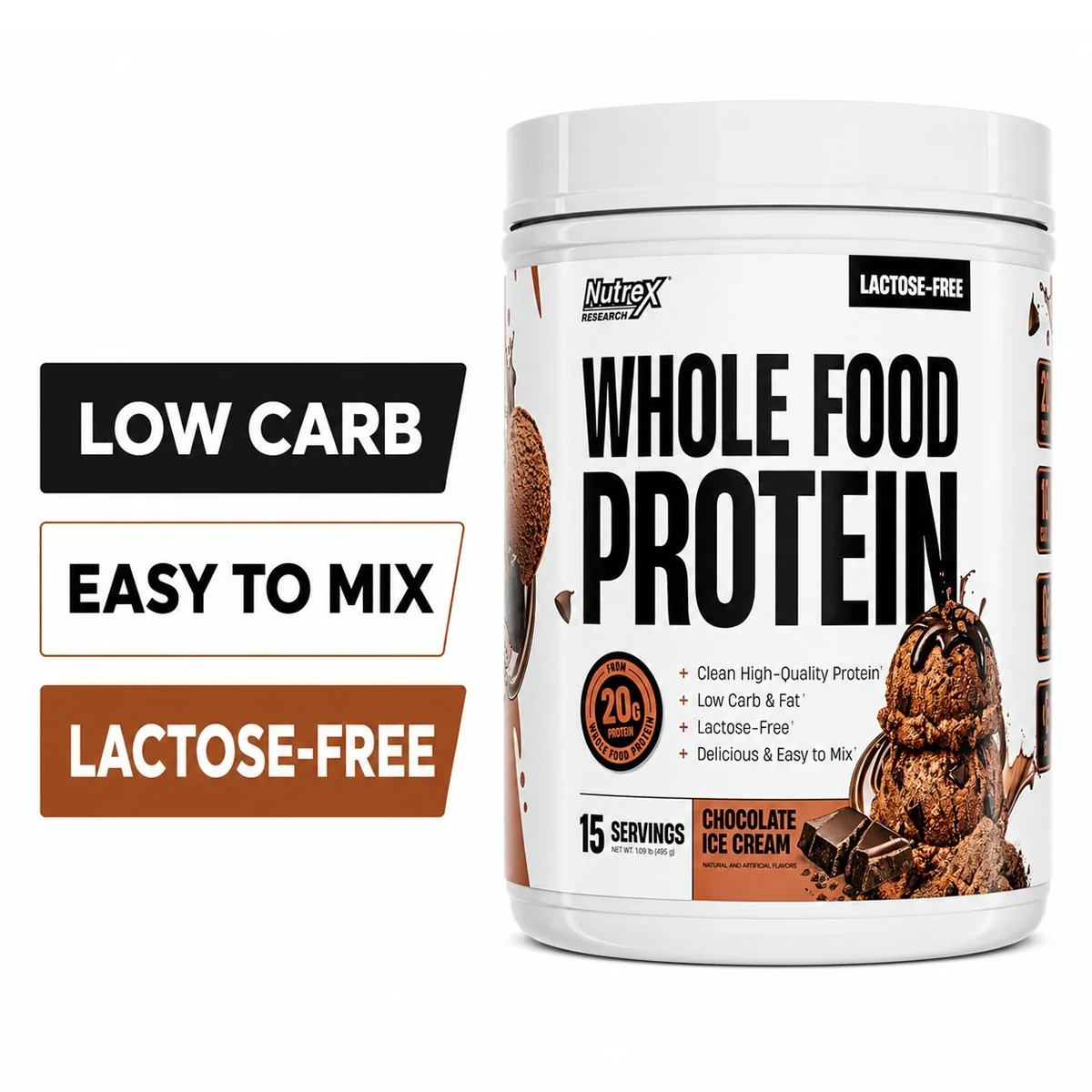
Nutrex Whole Food Protein offers a varied protein blend compared with the other powders listed.
One scoop provides 20 grams of protein and 110 calories.† The Whole Food Protein Blend contains beef collagen peptides, pea protein, brown rice protein, chicken protein, and egg protein.
Instead of getting all of the protein from dairy, you’re getting a combination of animal and plant proteins. That makes Nutrex useful when whey or other dairy proteins aren’t a good fit. The formula is dairy free and lactose free, but it isn’t vegan because it contains beef, chicken, and egg proteins.†
The blend also helps broaden the amino acid profile compared with relying on one plant protein alone. Pea and brown rice proteins complement each other better than either source would on its own, while egg and chicken add additional complete animal protein sources.†
There is still one limitation worth understanding. Beef collagen peptides are listed first in the blend, and the individual protein amounts aren’t disclosed. Just like ProLean, you can’t tell how much of the 20 grams comes from collagen versus the other sources.
Nutrex also has 8 grams of carbohydrate per scoop, compared with 2 grams in Precision and 0 grams in ProLean.† That’s not inherently a problem, but it matters if you’re comparing the products strictly on protein density.
This formula makes the most sense when the protein source itself is part of the decision. Someone avoiding dairy may get much more value from Nutrex than from a whey isolate, even if another powder provides a few more grams of protein per scoop.†
View Nutrex Whole Food Protein
David Protein Bars

Supplement facts
| Ingredient | Amount Per Serving |
|---|---|
| Calories | 150 |
| Total Fat | 2g |
| Saturated Fat | 1.5g |
| Trans Fat | 0g |
| Cholesterol | 5mg |
| Sodium | 130mg |
| Total Carbs | 13g |
| Dietary Fiber | 0g |
| Total Sugars | 0g |
| Added Sugars | 0g |
| Sugar Alcohol | 8g |
| Protein | 28g |
| Ingredients: Milk Protein Isolate, Collagen, Whey Protein Concentrate, Egg White, | |
| Maltitol, Glycerin, Allulose, Tapioca Starch, Soy Lecithin, Modified Plant Fat (EPG), Palm Kernel Oil, Coconut Oil | |
| Flavor System (May Vary): Pea Flower Extract (for color), Natural Flavor, Citric Acid, Salt, Carmine (for color), Sucralose, Acesulfame Potassium, Cocoa Powder (processed with Alkali) |
David Protein Bars offer a bar-based alternative to protein powders.
One bar provides 28 grams of protein for 150 calories.† That’s a large protein serving for something you can keep in a bag, desk, or car.
The protein comes from milk protein isolate, collagen, whey protein concentrate, and egg white.† That gives the bar several complete protein sources alongside collagen. As with the blended powders, the label doesn’t disclose how much protein comes from each source.
If work runs long, you’re traveling, or lunch ends up being much smaller than planned, a protein bar can keep the entire day’s protein from getting pushed into dinner. That’s especially useful for someone who already knows the problem isn’t appetite or protein knowledge. It’s simply having something available.
The macro profile deserves a closer look too. Each bar has 13 grams of total carbohydrate, including 8 grams of sugar alcohol, with 0 grams of sugar.† So “0 sugar” doesn’t mean carbohydrate free.
That sugar alcohol content can also matter if you’re sensitive to products like maltitol. One bar may fit perfectly, while multiple bars in a day may be less comfortable for some people.
David makes the most sense as a convenience tool rather than a direct replacement for a whey shake or whole-food meal. Its real value is making a substantial protein serving available when the alternative is often no protein at all.
You can compare more powders, bars, and specialty proteins in our protein category.
Protein and Kidney Health
This question deserves context because a high protein diet in a healthy adult isn’t the same situation as a high protein diet in someone with kidney disease.
A 2026 systematic review and meta analysis looked at 22 randomized trials in adults without chronic kidney disease. Higher protein intake increased estimated GFR, but the review found no consistent biochemical evidence of kidney injury. The authors also noted that many trials were short, so long term certainty is still limited. (26)
Kidney disease changes the target. Protein restriction is used in some diabetic kidney disease settings, so anyone with chronic kidney disease or a prescribed low protein diet should use individualized clinical guidance. (27)
Frequently Asked Questions
Does protein have to be eaten right after training?
The post workout period matters, but it isn’t a 30 minute countdown. Resistance exercise keeps muscle more responsive to protein for an extended period, so the meal before training and the meals after training can all contribute. (1)
Can collagen count toward daily protein?
Yes, collagen contributes to total dietary protein. Its amino acid profile serves a different role from a complete protein like whey. For a muscle focused meal, pairing collagen with a complete protein gives you a stronger essential amino acid profile. (16)
Is protein before bed useful?
Protein before bed can increase overnight protein synthesis, especially when it follows evening resistance exercise. Casein is commonly studied because its slower digestion fits a long overnight window. (28)
Does adding carbs or fat make protein less useful?
Mixed meals change digestion speed, but slower digestion doesn’t make the protein ineffective. Other foods can spread amino acid delivery over a longer period. That’s one reason results from isolated protein drinks don’t map perfectly onto a full meal. (14)
Where to Buy Protein Supplements
You can shop all of our protein powders, bars, and nutrition support options at SameDaySupplements.com, and you’ll find:
- Fast shipping: in-stock orders placed Monday through Friday before 3 PM ET ship the same day†
- Stocked products include protein and nutrition items from brands like Hi-Tech Pharmaceuticals, Insane Labz, Nutrex, and Thorne.
- Verified reviews: customer feedback can help you compare flavors, texture, and mixability†
- Bundles: curated combinations are available in our Stacks & Bundles section†
Wrapping Up
You don’t have to hit the same protein number every time you eat. Start with the amount you want to get across the full day, then split it across the meals that actually fit your schedule.
For many active adults, about 0.3 to 0.4 g/kg of high quality protein is a useful starting point for a meal. From there, body size and meal frequency can push the number higher.
The goal is a protein routine that fits the way you actually eat, supports your training, and feels realistic enough to keep doing.
Warnings and Side Effects
Most healthy adults can increase protein without much trouble, but the amount, source, and format can change how comfortable the diet feels.
Digestive discomfort
Bloating, fullness, gas, or changes in bowel habits can show up when protein intake rises quickly. Sometimes the issue is the size of the meal. Sometimes it’s lactose, sugar alcohols, several shakes in one day, or simply eating more food than you’re used to.
If a higher protein routine feels rough on your stomach, try adjusting the format before overhauling the whole diet. A different protein source, smaller servings, more food-based protein, or digestive support may make the same daily intake easier to tolerate.
Allergies and intolerance
Protein powders and bars can contain milk, egg, soy, or other common allergens. Whey and casein come from milk. Some blended proteins also use egg, beef, collagen, or multiple plant sources.
Lactose tolerance can also affect which dairy protein works best for you. Whey isolate usually contains less lactose than whey concentrate, while dairy-free blends avoid milk-based proteins altogether.
Kidney disease and prescribed low-protein diets
If you have kidney disease, diabetic kidney disease, or you’ve been told to follow a low-protein diet, general sports-nutrition protein targets may not be appropriate for you. Follow the intake recommended by your physician or renal dietitian.
Pregnancy, nursing, medications, and medical conditions
Protein foods are part of a normal diet, but supplements can include additional ingredients, sweeteners, probiotics, enzymes, or blends with their own warnings. Check the current product label before use.
Talk with your healthcare provider if you’re pregnant or nursing, taking medication, managing a medical condition, or following a medically prescribed diet.
Disclaimer
† Same Day Supplements is a dietary supplement retailer and digital publisher. We do not provide personal medical advice, diagnosis, treatment, or emergency health services. If you are experiencing a medical emergency, contact your local emergency services or go to the nearest emergency room or urgent care center immediately.
The content on this blog, including text, graphics, images, product comparisons, ingredient discussions, customer experiences, and other materials, is provided for general educational and informational purposes only. It is not intended to replace professional medical advice, diagnosis, treatment, or guidance from a qualified healthcare provider.
You should consult your physician or another qualified healthcare professional before starting any supplement, diet, exercise, fitness, or wellness program, especially if you are pregnant or nursing, under 18, taking medication, have a medical condition, are sensitive to stimulants, have a history of high blood pressure or heart concerns, or are subject to athletic drug testing.
Our blog content may include product label information, manufacturer-provided details, published research, anecdotal customer feedback, and Same Day Supplements editorial interpretation. Any product discussion or recommendation is intended to help readers compare supplement options and should not be interpreted as medical advice or a guarantee of results.
Individual results may vary. Same Day Supplements makes no guarantee regarding the effectiveness, safety, suitability, or results of any product, ingredient, supplement stack, or wellness approach discussed on this site. Product formulas, labels, warnings, serving sizes, ingredients, availability, and regulatory status may change without notice. Always read the full product label before use and follow the manufacturer’s directions and warnings.
Information about ingredients, health conditions, medications, interactions, side effects, allergies, and precautions may not include every possible use, risk, warning, or adverse effect. If you have questions about whether a product is appropriate for you, consult a qualified healthcare provider before use.
Statements made about dietary supplements have not been evaluated by the Food and Drug Administration. Dietary supplements are not intended to diagnose, treat, cure, or prevent any disease.
This disclaimer supplements and is part of the Same Day Supplements website Terms & Conditions, Privacy Policy, and other posted policies and conditions of use.