Mesomorph: How To Determine Your Body Type
📖 Table of Contents
Ever wonder why your friend bulks up from just a few gym sessions while you struggle to see gains? Your body type might be the reason. Understanding whether you’re an ectomorph, mesomorph, or endomorph can help you tailor your workout and diet for better results. In this comprehensive guide, we’ll focus on the mesomorph body type – what it means and how to optimize your fitness if you have these traits.
But if you’re in the market for Mesomorph Pre Workout, this isn’t that page. However, we do have a comprehensive blog on the changes of mesomorph pre workout.

What Are The Body Types: History
The concept of body types (or somatotypes) originated in the 1940s with psychologist Dr. William H. Sheldon. He classified physiques into three categories – Endomorph, Mesomorph, and Ectomorph. He even tried linking body types to personality traits – for example, claiming mesomorphs were naturally bold and competitive. He was wrong. The supposed link between physique and personality was later debunked and fell out of scientific favor. (1)
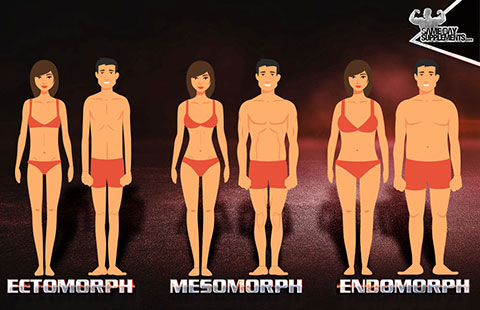
However, Sheldon’s basic body type categories were useful for describing body builds, and they “live on” today in fitness and nutrition discussions (minus the personality stuff). Over time, researchers refined the concept. In the 1960s-70s, Barbara Heath and Lindsay Carter developed the Heath-Carter method, which uses precise measurements (like skinfolds and bone widths) to rate someone’s mix of endomorphy, mesomorphy, and ectomorphy. This modern approach treats somatotype as more of a body composition analysis, rather than a fixed label – allowing for combinations like “mesomorphic ectomorphs” or “endomorphic mesomorphs”. (1)
How Do We Classify Body Types Today
Heath’s approach to understanding somatotypes took on a more academic standard. With the help of Lindsay Carter, they created the Heath-Carter method. Which still maintain applications when assessing the development of college athletes today. The main difference between the Heath-Carter method and Sheldon’s is perspective.†
Sheldon believed your somatotype is permanent throughout an adult’s life. At the same time, the Heath-Carter method tracks the development of athletes, which is now preferred because it perceives a person’s physique as changeable.†
Limitations of Somatotypes
It’s extremely rare to find someone who is a pure version of one of the three primary somatotypes. Most individuals exhibit characteristics of two or even all three somatotypes. In Sheldon’s day, body type was seen as predetermined and unalterable, but we now know that with consistent training and nutrition, an individual can shift their physique to be more muscular or leaner over time.†
Somatotype Research Studies
In a 2015 study of soccer players, differences were identified in somatotypes between players’ playing positions and within their divisions. (2)
And in 2017, a study looked into the relationship between somatotypes and the performances of volleyball players. What the researchers found here was:
“Division A1 were taller, heavier, more muscular, and less endomorphic compared to those of Division A2″ (3)
So what does this mean?
For starters, this could mean that there is evidence suggesting somatotypes may play a role in our overall body composition. The differences observed between players in each position suggest that different training styles may be beneficial for each somatotype.†
What Are the Three Body Types?
In the somatotype system, there are three broad body types. Few people fit perfectly into one category; most of us are a mix (more on that later). Here are the classic three body types and their common traits:
- Ectomorph: Naturally thin and lean, with a smaller frame (narrow shoulders and hips). Ectomorphs typically have a fast metabolism, so they have trouble gaining weight or muscle mass. They may appear lanky and find that, no matter how much they eat or lift, they gain very slowly.†
- Mesomorph: Naturally muscular and athletic, with a medium frame. Mesomorphs often have wide shoulders and a narrow waist, giving them a fit, “V-shaped” look. They tend to gain muscle easily and usually have an efficient metabolism – meaning they can gain or lose weight more readily than other types. This is the classic athletic physique.†
- Endomorph: Naturally rounder or curvier, with a larger frame (wider hips, thicker limbs). Endomorphs have a slower metabolism, so they gain fat easily and may struggle to lose weight. They often carry more body fat overall, but can also be naturally strong (just with a softer look).†
It’s important to remember these are generalized extremes. Real people fall somewhere in between. For instance, you might have the height and narrow frame of an ectomorph but also carry extra weight around your hips like an endomorph. Or you might be mostly mesomorph but with slightly thinner limbs. Mixed body types are normal – very few individuals are 100% pure ecto/meso/endo. In fact, we all exist on a continuum, and our position can shift with lifestyle changes.†
How to Identify Your Body Type
Not sure which category you fall into? Here are a few tips and questions to help you identify your body type (or mix of types):
- Look at your build. Are your shoulders broader than your hips (mesomorph trait), or are your hips wider (endomorph trait)? Are your limbs long for your torso and generally slim (ectomorph trait)?
- Muscle and weight gains. When you lift weights, do you build muscle easily, or is it quite hard to see progress? Gaining muscle “extremely simple” with minimal effort is a mesomorph giveaway. Struggling to add even a few pounds of muscle suggests more ectomorph tendencies.†
- Fat storage and loss. Do you gain fat quickly if you’re not careful with your diet? Endomorphs have to be very cautious, whereas ectomorphs might stay skinny almost no matter what. Mesomorphs are in between: they can gain fat with a surplus, but also lose fat readily with some effort.†
- Metabolism clues. If you’ve ever had a metabolic test or just observed your body’s responses: Do you feel like you burn off meals fast (often hungry, hard to gain weight) = likely ecto. Or do calories seem to “stick” easily (gain weight from any extra food) = likely endo. Mesomorphs often describe their metabolism as “average” or efficient – they can either gain or lose depending on how they eat and exercise.†
You might find you identify with aspects of two categories – that’s completely fine. For example, some people call themselves “ecto-endomorph” (sometimes termed “skinny-fat”): they have a light build but still carry fat in certain areas. Others might be “meso-endomorph”: naturally strong and muscular but also tending to store fat if not active. Remember: these labels are just tools to understand your tendencies. They are not strict limits.†
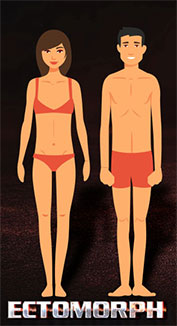
Ectomorph
Ectomorphs tend to be leaner, with long, slim muscles/limbs. They generally have fast metabolisms, which makes it difficult to gain weight. Because of this, they are often referred to as the “hard-gainers”.†
Associated Physical Traits:
- Naturally thin with a smaller bone structure†
- Fast metabolism; struggles to gain weight or muscle†
- Narrow shoulders and hips†
- High endurance but low strength starting point†
Potential Advantages:
- A light frame may aid them in more aerobic activity, like gymnastics.†
- With a smaller body surface area, they may also have enhanced suitability for endurance activity.†
- Their body may be better at thermoregulation, important in endurance based sports.†
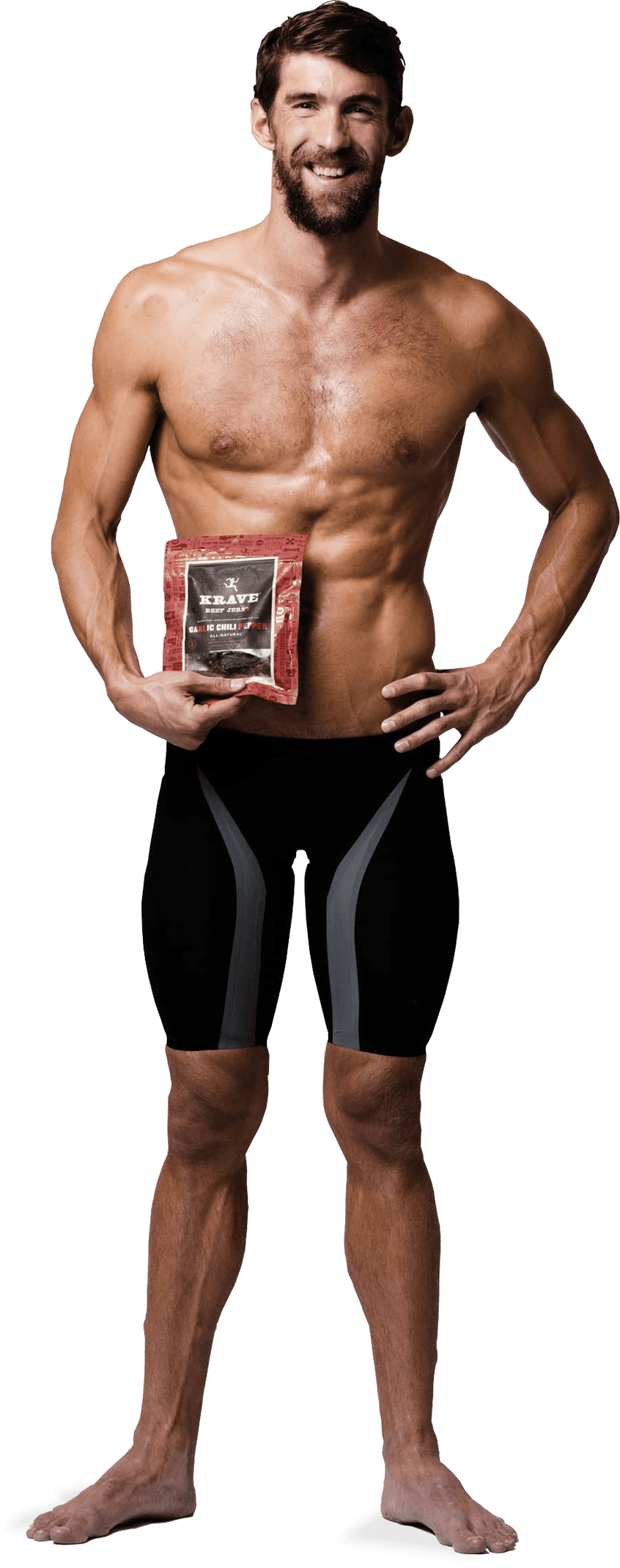
Ectomorph Celebrity Athlete
Michael Phelps
What Should Ectomorphs Do More Of?
We would recommend individuals in this somatotype category keep it simple. And that will break down to the following:
Train Smart
- If you’re goal is to gain muscle mass, you may want to limit your cardio sessions to a minimum. Instead, focus on your resistance training. But the main takeaway is to do a progressive overload. (4) If you’re not getting stronger with weeks passing by, you’re not building muscle mass.†
Rest Appropriately
- Additionally, you should also consider reducing your training at the gym appropriately. This may seem counterproductive, but there’s an important reason for it. Training too much may result in expending too many calories. Thus negating your weight-gaining efforts. By reducing your training, we don’t mean you should only train 3 days a week (unless that works for you!). (5) Instead, make sure your workout program reflects your goals. So instead of spending several hours at the gym, take 45 mins to an hour or even an hour and a half. And use that time to train functionally (compound movements are your friend).†
Eat At A Surplus
- Like with any goal, consistency is key. You need to develop a routine you can stick to, which includes a nutrition regimen. Eating at a surplus is going to be a large factor in how efficiently you build muscle. But what you eat will reflect how you gain weight. The mindset that a “calorie is a calorie” may work for some, but the source still matters. (6)
Mesomorph
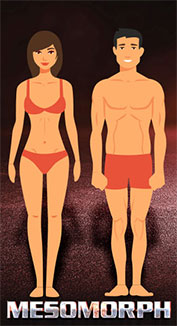
Mesomorphs have what most consider the “classic athletic” physique. They typically have broader shoulders, a narrow waist, and naturally higher muscle mass. They respond quickly to training and can build strength and size efficiently. However, their advantage also means they can gain fat if they become inactive or eat in a surplus for too long.†
Associated Physical Traits:
- Medium frame with broad shoulders and a narrow waist†
- Naturally muscular and athletic build†
- Gains and loses weight relatively easily†
- Responds quickly to training†
Potential Advantages:
- These individuals may respond well to cardiovascular and resistance training.†
- Mesomorphs typically can sustain low body fat levels.†
- Depends on the sports, but generally, mesomorphs can easily gain or lose weight.†
Mesomorph Celebrity Athlete
Arnold Schwarzenegger

What Should Mesomorphs Do More Of?
Train Like An Athlete
- As a mesomorph, you may want to focus on your strength training. Keep in mind that when you’re young, you can get away with having a less-than-perfect diet and workout routine. But when you’re older, you’ll likely regret not having the discipline to avoid unhealthy decisions. Building healthy habits at a younger age and keeping your nutrition on track means you’ll maintain your good physique as you get older.†
Eat Clean
- You can’t out-train a bad diet! Mesomorphs generally have no trouble eating what they want to eat, as they may lose weight easily. On the flip side, they may gain weight just as readily. Since mesomorphs generally have a higher muscle mass percentage, they may need more calories than other body types. If you struggle with finding that balance, consider tracking your macros.†
Endomorph
On the opposite side of the spectrum, we have the Endomorphs. People with this body type generally have a harder time losing weight.† The common characteristics for endomorphs include wider waists, large bone structures, and a predisposition to storing fat.†

Associated Physical Traits:
- Wider frame with a rounder shape and higher body fat†
- Gains fat easily and loses it slowly†
- Often strong but with a slower metabolism†
- Needs a careful balance of diet and cardio†
Potential Advantages:
- A larger size can benefit some sports where bulk is useful, such as rugby.†
- Endomorphs also tend to have large lung capacity, which can make them suited to sports such as rowing.†
Endomorph Celebrity Athlete
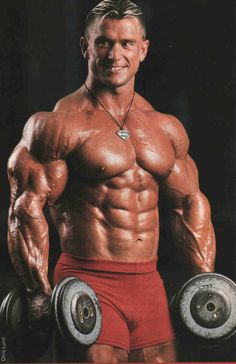
Lee Priest
What Should Endomorphs Do More Of?
If your goal is to slim down or tone up, there is a ton of information claiming to be the best way to burn fat. So let’s buffer through the B.S. and give you the facts on burning fat:
Diet = Key
- In a study done in 2016, researchers looked at how fast they could help their participants get in shape while making accommodations to their diets and exercise regimens. In this study, all the participants were eating at a calorie deficit, but the group eating a high protein content was able to gain the most muscle mass while losing weight. Whereas the group just eating at a calorie deficit lost weight, but did not gain as much muscle mass (they also did not lose muscle).†
- Researchers also found that the high-protein group lost more body fat than the other group (7).
Find An Exercise Regimen That Works For You
- In a study done in 2017, researchers compared the weight loss of abdominal visceral fat between high-intensity interval training (HIIT) vs prolonged moderate-intensity continuous training. What they found was that there wasn’t a significant advantage between either training style. However, HIIT may be the preferred training method due to its efficiency in relation to time (8).
Stay Hydrated
- Staying hydrated may feel like a “no-brainer”, but a survey reported in the New York Times states we may be countering the positive effects of drinking water by overly consuming alcoholic and caffeinated beverages (9). So keep in mind that the calories in your cup still count towards the calories you consume in the day.†
- When you’re not hydrated, your body expresses this in a few ways. For starters (in no particular order), you may notice the texture of your skin becoming drier than normal for you. Or you may notice your urine is a darker shade of yellow than normal/healthy. And one of the most common signs of dehydration is bloating. When your body is not getting enough water, it starts to hold on to what little it gets. This, of course, is not the only reason for bloating, but it may be one of the most frustrating when attempting to gain muscle mass/burn fat. Therefore, staying hydrated helps reduce water retention.†
Combination Somatotypes
As we mentioned, people have traits that cross over. These are considered combination body types/combination somatotypes. The information on combination somatotypes as a classification is limited. But some recognized names are ecto-endomorph, ecto-mesomorph, and endo-ectomorph.†

Ecto-Endomorph
- Generally are pear-shaped†
- They have thinner upper bodies†
- Fat storage on the lower half†


Ecto-Mesomorph
- Easily fluctuates between being incredibly lean or very muscular†
- Tend to have broad shoulders, narrow waists, and a “V” shape of the torso†
- Fat tends to be on the stomach, but can also be on the buttocks†

Endo-Ectomorph
- Generally are apple-shaped†
- More fat storage in the upper body†
- Thinner hips, thighs, and legs†
Wrapping Up!
Everyone has different genetic predispositions that may aid or hinder our fitness goals. But these predispositions don’t have to act as limitations. If you’re not happy with your somatotype, you’ll have to work a little harder to get and maintain the physique you like. Luckily, there are methods and supplements that can help you get there faster.
This concludes our blog on somatotypes! Thank you for reading, and if you have any questions or if there’s another product you’d like us to review, send us an email!
Disclaimer
†Please note
Disclaimer
† Same Day Supplements is a dietary supplement retailer and digital publisher. We do not provide personal medical advice, diagnosis, treatment, or emergency health services. If you are experiencing a medical emergency, contact your local emergency services or go to the nearest emergency room or urgent care center immediately.
The content on this blog, including text, graphics, images, product comparisons, ingredient discussions, customer experiences, and other materials, is provided for general educational and informational purposes only. It is not intended to replace professional medical advice, diagnosis, treatment, or guidance from a qualified healthcare provider.
You should consult your physician or another qualified healthcare professional before starting any supplement, diet, exercise, fitness, or wellness program, especially if you are pregnant or nursing, under 18, taking medication, have a medical condition, are sensitive to stimulants, have a history of high blood pressure or heart concerns, or are subject to athletic drug testing.
Our blog content may include product label information, manufacturer-provided details, published research, anecdotal customer feedback, and Same Day Supplements editorial interpretation. Any product discussion or recommendation is intended to help readers compare supplement options and should not be interpreted as medical advice or a guarantee of results.
Individual results may vary. Same Day Supplements makes no guarantee regarding the effectiveness, safety, suitability, or results of any product, ingredient, supplement stack, or wellness approach discussed on this site. Product formulas, labels, warnings, serving sizes, ingredients, availability, and regulatory status may change without notice. Always read the full product label before use and follow the manufacturer’s directions and warnings.
Information about ingredients, health conditions, medications, interactions, side effects, allergies, and precautions may not include every possible use, risk, warning, or adverse effect. If you have questions about whether a product is appropriate for you, consult a qualified healthcare provider before use.
Statements made about dietary supplements have not been evaluated by the Food and Drug Administration. Dietary supplements are not intended to diagnose, treat, cure, or prevent any disease.
This disclaimer supplements and is part of the Same Day Supplements website Terms & Conditions, Privacy Policy, and other posted policies and conditions of use.
