
BPC-157 vs. TB-500: Which Peptide Is Better for Recovery?
📖 Table of Contents
If you’re trying to recover faster, heal up after a nagging injury, or simply stop feeling beat up every time you train, you’ve probably seen BPC-157 vs TB-500 all over the place. I get asked about these two constantly, because they sound similar but people use them for different problems. So which one actually fits your situation?
In this guide, we’ll cover:
- What peptides are, in plain English
- What BPC-157 is, and what people use it for
- What TB-500 is, and what people use it for
- The key differences between BPC-157 and TB-500
- More common supplement alternatives if you don’t want peptides
Quick heads-up before we start: This is for education only. I’m not giving medical advice. BPC-157 and TB-500 aren’t FDA-approved, and they may be banned in tested sports.
Here’s the quick way I explain it:
- If your problem is mostly tendons, ligaments, or your gut, people usually lean toward BPC-157.†
- If your goal is mostly muscle recovery, movement, and mobility, people usually lean toward TB-500.†
- BPC-157 gets talked about more as targeted support.†
- TB-500 gets talked about more as whole-body support.†
- If you don’t want peptides, I usually start you with basics like collagen and curcumin, plus options like Genesis-1 or Peptide 185.†
Reminder: Not medical advice. Not FDA-approved. It may be prohibited in tested sports.

What Are Peptides?
Peptides are short chains of amino acids. Amino acids are the building blocks your body uses to make protein, so peptides are basically smaller protein pieces. Most peptides are roughly 2 to 50 amino acids long, which can make them easier for the body to handle than full proteins. (1)
I like to think of peptides like “text messages” inside the body. They can carry signals that help coordinate things like repair and inflammation. (1)
I like to think of peptides as messengers. They can help your body do jobs like:
- Sending signals: telling cells what to do next
- Repairing tissue: supporting the rebuilding process after stress or injury†
- Managing inflammation: helping control how “revved up” the immune response gets†

What do peptides do in the body?
Your body already makes peptides. They play roles in hormone signaling, immune communication, and tissue repair. (1)
How it works: peptides can bind to receptors, which are like locks on the surface of cells. When the right peptide fits, it can trigger a chain reaction inside the cell. That reaction might involve repair, inflammation control, or other “do this now” messages. (1)
Because they can be very specific, peptides get a lot of attention in areas like wound healing and tissue protection. (2, 3, 4)
Why Are Peptides Popular in Recovery and Healing?
In fitness and sports rehab circles, peptides got popular for one simple reason: people want to bounce back faster and keep training. Most folks I talk to want less downtime, and they want a quicker return after strains, tendon pain, or surgery rehab.†
Peptides get discussed because some peptide-based therapies are designed around signaling and repair pathways, not just pain masking. (3)
In practice, you’ll see people talk about peptides for things like muscle recovery, joint health, and inflammation control, because those are the things that determine whether you can train tomorrow.†
What is BPC-157?
BPC-157 is often called the “Body Protection Compound.” It’s a lab-made peptide based on a protective protein found in the stomach, and people bring it up because it may support healing and recovery. (5)
Overview of BPC-157:
Pentadecapeptide BPC-157 is made of 15 amino acids. It’s described as stable, meaning it can hold up well even in stomach acid, which is why you’ll see it discussed in both oral and injectable forms. (6, 7, 8)
How BPC-157 Works in the Body:
Here’s the simple version, it’s usually discussed in two big buckets:
- It may support new blood vessel growth (angiogenesis).†
- It may support healing signals (growth factors).†
Benefits of BPC-157:
- Enhanced Tissue Repair: It’s known in the research world for support tied to muscles, tendons, and ligaments. That’s why athletes keep bringing it up when they’re trying to shorten downtime. (6, 5)
- Reduced Inflammation: Animal research suggests it can reduce pain signaling in an incisional pain model. That lines up with why people talk about it when an area stays irritated. (14)
- Gut Health Improvement: One unique angle is that it’s derived from a stomach-related protective protein, so it’s often discussed for gut lining support and the brain gut connection. (15, 16)
- Joint and Ligament Healing: People lean toward it for ligaments and joints because those areas don’t get great blood flow, which can make recovery feel slow. (6)
- Neuroprotective Effects: Early work discusses possible nervous system effects, which is why you’ll sometimes see it mentioned in nerve-related recovery conversations.† (13)
Is BPC-157 legal?
BPC-157 isn’t FDA-approved as a medical treatment. It’s mostly used in research settings, and it’s listed as prohibited by WADA (World Anti-Doping Agency), which matters if you compete in tested sports. (17, 18)
What is TB-500?
TB-500 is a synthetic peptide commonly discussed for healing and regeneration support. It’s based on a natural peptide called Thymosin beta-4, which is present in many cells in the body. (19, 20)
Thymosin beta-4 is tied to cellular repair and wound healing pathways, which is why TB-500 stays popular for recovery, mobility work, and general tissue quality discussions. (19)
Overview of TB-500:
TB-500 is discussed as a way to mimic thymosin beta-4 activity. One key concept here is actin, which is like the scaffolding inside cells that lets them move and change shape. When cell movement improves, the body can coordinate repair more effectively. (21, 22)
How TB-500 Works in the Body:
TB-500 is often talked about for supporting blood vessel growth and tissue repair signaling, especially in areas that don’t heal quickly. (19)
It also gets attention for scar tissue and stiffness after injuries or surgeries. Scar tissue can limit movement when it builds up poorly, so anything that supports healthier tissue remodeling is going to get talked about in rehab circles.† (21)
Benefits of TB-500:
- Accelerated Muscle Recovery: It’s commonly brought up to support muscle recovery and shorter downtime, especially during hard training blocks.† (21)
- Improved Wound Healing: Thymosin beta-4 is discussed in wound healing and tissue repair contexts, which is why TB-500 stays on the radar. (19)
- Enhanced Flexibility and Mobility: People discuss it when stiffness and tissue tightness linger after injury, because of the scar tissue remodeling angle.† (21)
- Reduced Inflammation: Thymosin beta-4 has been discussed for inflammation-related processes in regenerative contexts. (19)
Is TB-500 Legal?
TB-500 isn’t FDA-approved for medical use. You’ll mostly see it discussed in research and performance settings, not as a standard treatment in everyday medical practice. (18)
BPC-157 vs. TB-500 – Key Differences:
Both peptides get used in recovery conversations, but they have different “main uses” in how people talk about them. Here’s the cleanest breakdown.
| BPC-157 | TB-500 | |
Origin & Structure |
||
How It Works |
||
Best Known For |
|
Which Peptide is Better for Recovery?
If someone asks me which one is better, I always come back to the same answer: it depends on what you’re trying to fix. BPC-157 and TB-500 get grouped together, but most people end up preferring one based on the type of tissue problem they’re dealing with.†
I use this chart to help you think it through without getting lost in internet noise.
Factors to Consider:
| BPC-157 | TB-500 | |
Type of Issue |
Often discussed for tendons, ligaments, and gut lining support.† | More commonly discussed for muscle recovery, wound healing, and tissue quality.† |
How Fast Recovery Feels |
Often tied to blood flow and repair signaling around a specific problem area.† (10) | Often tied to cell movement and tissue remodeling, which can matter for mobility work.† (21) |
Pain & Inflammation |
Commonly mentioned for inflammation and discomfort around injured areas.† (14) | More often discussed for mobility and tissue quality first, with inflammation support as a secondary angle.† |
Scar Tissue Concerns |
N/A† | Often brought up when stiffness after injury feels like a bigger limiter than pain.† (21) |
How It’s Commonly Used |
Discussed in oral and injectable forms.† (6) | Generally discussed as injectable and systemic rather than site-specific.† |
Chronic vs. Acute Issues |
Often mentioned for nagging, slow-healing problems like tendon irritation and gut issues.† | More commonly mentioned for short-term recovery needs like hard training blocks and rehab phases.† |
Extra Benefits |
People also talk about gut comfort and broader inflammation control.† (15) | Often discussed for better long-term movement quality after injury.† |
What Is Peptide 185?
When people ask me about Peptide 185, here’s the clean explanation.
Peptide 185 (also called DL-185) is made from two leucine molecules bonded together. Leucine is an amino acid known for turning on muscle-building signals, which is why it’s a staple in muscle recovery nutrition. (23, 24, 25)
Leucine works by activating mTOR, which you can think of as a main “on switch” for muscle protein building after training. When it turns on, your body is more likely to repair and build muscle from the workout you already did. (23, 24)

Why Peptide 185 is different
What makes it stand out is the form. Because it’s a dipeptide, meaning two amino acids linked together, it may be absorbed and transported differently than free leucine. Some research suggests dipeptides can enter the bloodstream intact, which could change the muscle-building signal you get. (23)
What the research shows
In one small study, both DL-185 and leucine raised plasma leucine, but only DL-185 significantly increased muscle protein synthesis rate. That’s the practical reason lifters talk about it for recovery and growth support when training is demanding.† (23)
What Is Genesis‑1?
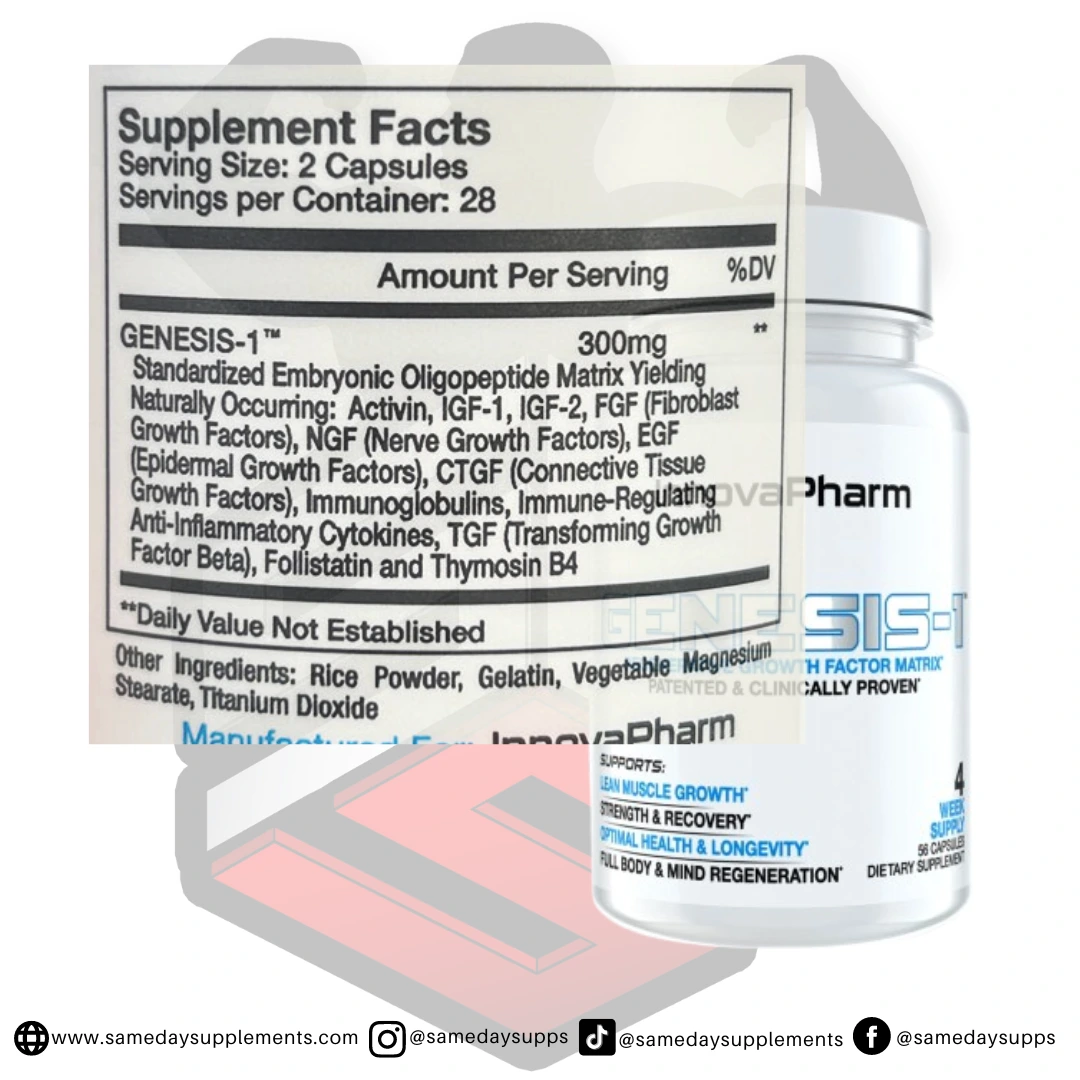
Genesis-1 is very different from BPC-157 and TB-500. Instead of being discussed as a single-peptide tool, it’s usually talked about as a full-body recovery supplement.†
It uses chicken embryo extract (Humanofort) and includes a wide mix of growth factors, immune-support compounds, and peptides like thymosin beta-4. The goal is broader recovery support, stress support, and overall balance, instead of trying to “hit” one tendon or one injury.†
Key Ingredients:
Genesis-1 contains several growth factors, including:
- IGF-1 and IGF-2: Growth signals linked to muscle repair and growth biology. (26)
- FGF, EGF, NGF: Signals involved in cell health and tissue repair pathways. (27, 28, 29)
- CTGF: A regulatory protein connected to connective tissue processes. (30)
- Follistatin: Discussed for influencing myostatin signaling, which can limit muscle growth. (31)
- TGF-beta (transforming growth factor beta): A major signaling family involved in repair and adaptation. (32)
Simple meaning: these are “signals” your body already uses during repair and adaptation.†
How to Use It
- Dose: 1 capsule in the morning and 1 at night, 300 mg total, matching the dosing discussed in clinical use contexts.†
- Hormone note: It’s described as non-hormonal, so no cycling or PCT (post-cycle therapy, meaning drugs used after hormone cycles) is required. It’s also commonly used by both men and women.†
How It Compares with BPC‑157 & TB‑500
BPC-157 and TB-500 are mainly discussed around tissue repair and blood vessel growth. Genesis-1 is more of a whole-body approach, leaning into recovery, stress response, and general regeneration support.†
Hi-Tech Pharmaceuticals Pro HGH Peptides
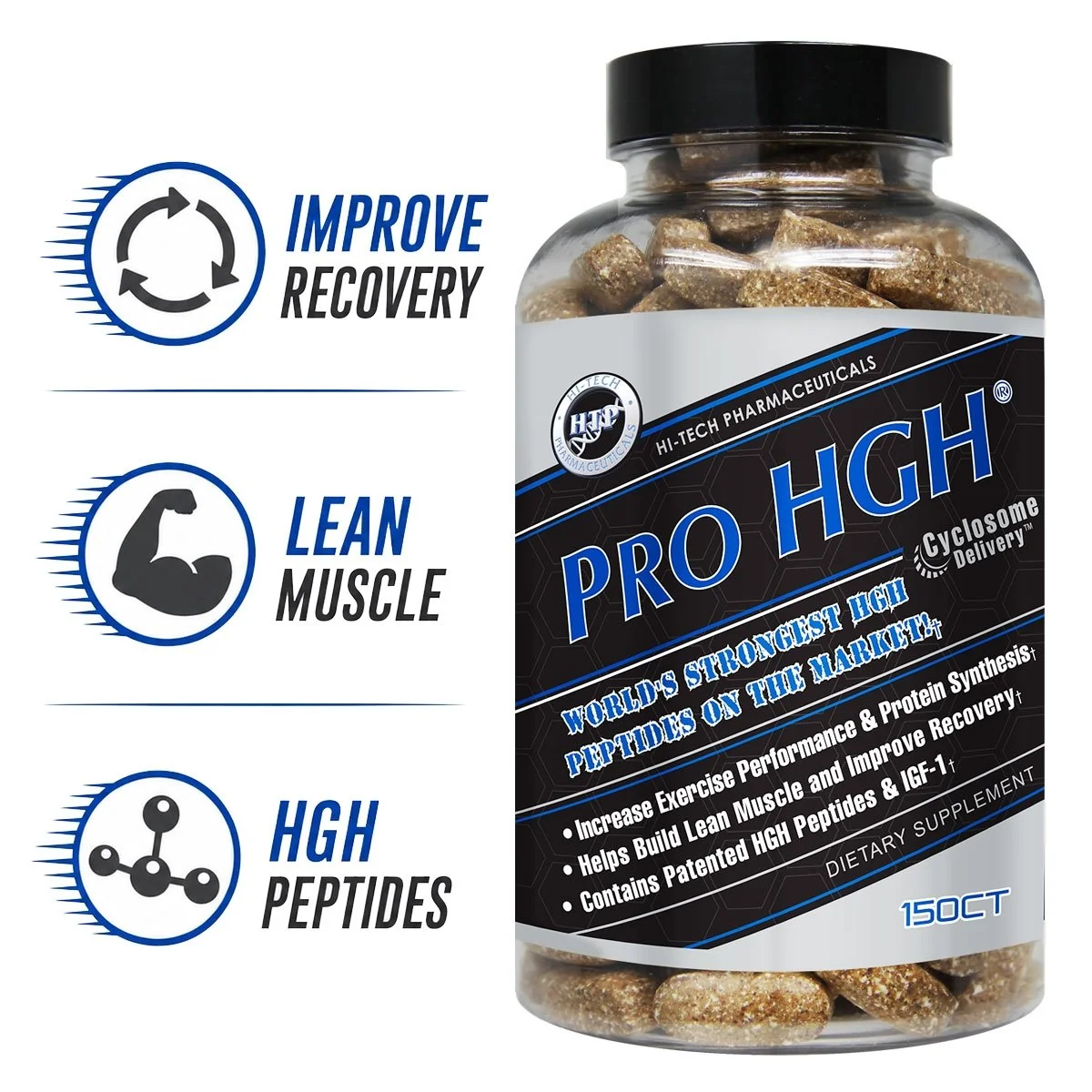
When customers ask for something that sits closer to HGH and growth-factor support without going into injectable research peptides, I also point them to Hi-Tech Pharmaceuticals Pro HGH Peptides. It’s built around a different concept than Genesis-1, but it belongs in the same recovery conversation for people chasing better training recovery, lean-mass support, and nighttime recovery support.†
What it is:
Pro HGH Peptides is a natural growth hormone support supplement designed to support the body’s own HGH and IGF-1 pathways, protein synthesis, lean muscle development, recovery, and exercise performance.† It’s intended to support endocrine function and natural pituitary growth hormone secretion, rather than replace your hormone production.†
Why it fits this guide:
People usually look at BPC-157 and TB-500 when they want repair support. Pro HGH fits when your bigger issue is “I’m not recovering well overall,” especially when sleep and nighttime recovery are part of the conversation.† That’s because the product is designed to complement the body’s natural nighttime growth hormone cycle.†
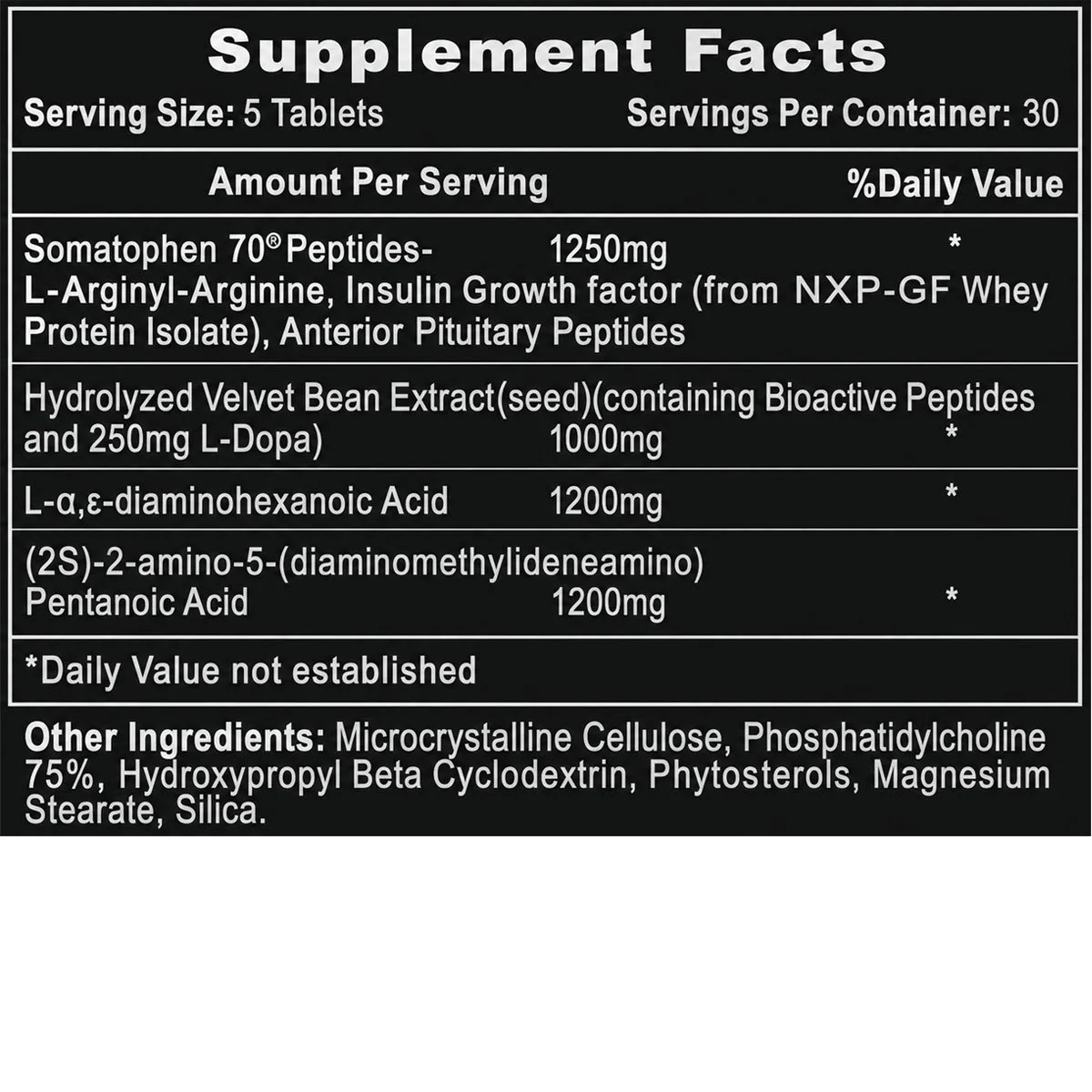
Formula highlights:
- Somatophen 70 Peptides, 1250 mg: This peptide blend includes L-Arginyl-Arginine, insulin-like growth factor components from NXP-GF whey protein isolate, and anterior pituitary peptides. NXP-GF is described as a whey fraction isolate with guaranteed IGF-1 content, anterior pituitary cells are discussed in the literature as containing bioactive peptides, and newer endocrine review context connects GH activity with direct and IGF-1-mediated effects. In plain terms, this is the growth-factor side of the formula.† (33, 34, 35)
- Hydrolyzed velvet bean extract (seed), 1000 mg: Includes bioactive peptides plus 250 mg L-Dopa. Velvet bean, also known as Mucuna pruriens, is known for L-DOPA, a metabolic precursor of dopamine.† If you’re wondering why that matters, dopamine is a key inhibitory signal involved in prolactin regulation. (36, 37)
- L-α,ε-diaminohexanoic acid, 1200 mg: This is the chemical-name presentation for L-lysine. In this formula, it pairs with L-arginine as the paired amino-acid side of the HGH-support formula. A young-men study used 1,500 mg L-arginine plus 1,500 mg L-lysine in resistance-exercise conditions and measured plasma GH response, which keeps this ingredient pair relevant to GH-support discussions.† (38, 39)
- (2S)-2-amino-5-(diaminomethylideneamino) pentanoic acid, 1200 mg: This is L-arginine. Arginine is commonly used in exercise-performance formulas because of nitric-oxide pathways, and it also appears in GH-response research with L-lysine.† (40, 39, 41)
Coach’s honest take:
If you’re expecting an oral amino acid supplement to spike serum growth hormone in the short term, that’s not how the evidence tends to look in trained lifters. One study in male bodybuilders found commercial oral amino acid supplements did not increase serum growth hormone concentrations. (42)
So I don’t frame Pro HGH as a guaranteed “GH spike” product. I frame it as a comprehensive nighttime recovery support formula with peptides and delivery tech, and the results depend on your training, sleep, diet, and consistency.†
How to take it:
Take 5 tablets daily. Most users take it at night before bed, because sleep and training are two natural places where growth hormone already enters the recovery conversation.† A 2018 paper comparing post-exercise GH release and nocturnal pulses found the overall GH milieu composition was similar, which is a useful reminder that your body already has built-in GH rhythms tied to both sleep and training. (43)
Who it’s great for:
Active adults who want recovery support and lean-mass support without using injectable research peptides, plus anyone who wants a stimulant-free product they can stack with other performance supplements.†
Who should skip it:
If you’re sensitive to dopamine-related ingredients, velvet bean extracts can be a poor fit.†
Supplement Alternatives:
I always tell people this first, because it’s true for most lifters.
You don’t have to use peptides to recover well.
For a lot of people, regular supplements plus better sleep and smarter training get the job done. Here are the options I most often walk through, depending on what you’re trying to improve.
1. Collagen Peptides:

Overview: Collagen is a structural protein in connective tissue, things like tendons, ligaments, cartilage, and skin. Collagen peptides are broken-down collagen pieces that can be absorbed more easily, which is why people use them for joint and tissue support. (44)
Benefits:
- Joint and ligament support: A systematic review found collagen peptide supplementation has evidence tied to body composition, collagen synthesis, and recovery contexts, which is why it’s a steady long-term play. (45)
- Skin and wound healing: Collagen is directly involved in wound healing processes, which helps explain why it’s used for connective tissue support beyond just joints. (46)
- Bone health: A randomized controlled study found specific collagen peptides improved bone mineral density and bone markers in postmenopausal women. (47)
How To Take Panda Supps Collagen Peptides: Mix 1 scoop with cold or hot water or juice, once daily, or as directed by your health care professional.
2. Curcumin (Turmeric Extract):

Overview: Curcumin comes from turmeric. It’s one of the most common non-peptide options for inflammation support and soreness management, because it acts on multiple inflammation and antioxidant pathways. (48)
Benefits:
- Anti-inflammatory support: A review describes curcumin’s anti-inflammatory effects across inflammatory diseases, which is why people use it for chronic joint irritation. (49)
- Oxidative stress support: Curcumin is discussed for antioxidant roles tied to oxidative stress and mitochondrial function. (50)
- Exercise recovery: A 12-week study in adolescent athletes found curcumin supplementation may relieve postexercise muscle fatigue. (51)
How To Take Thorne Curcumin Phytosome: Take 1 to 2 capsules twice daily, or as recommended by your health professional.
3. Glutamine:

Overview: Glutamine is an amino acid that plays a role in gut lining fuel and immune system function. It’s a nice option when training stress is high and your recovery feels run down. (52)
Benefits:
- Muscle recovery support: In professional basketball players, glutamine supplementation affected biomarkers of muscle damage in a study, which is why athletes use it during high volume training. (53)
- Immune support: A review describes glutamine metabolism in immune function and supplementation contexts. (54)
- Gut lining fuel: A review outlines glutamine roles in the intestine and implications for intestinal diseases, which fits why people compare it to gut-support peptide discussions. (55)
How To Take APS Nutrition L-Glutamine: Mix one rounded teaspoon with 8 oz of water or your favorite beverage, or use as directed by a physician or licensed nutritionist.
4. Omega-3 Fatty Acids (Fish Oil):

Overview: Fish oil is one of the most reliable “base” recovery supplements because omega-3 fatty acids support inflammation balance and joint health. (56)
Benefits:
- Post-exercise inflammation: A systematic review of RCTs evaluated omega-3 supplementation effects on post-exercise inflammation and muscle damage outcomes. (57)
- Osteoarthritis support: A narrative review discusses omega-3 fatty acids for osteoarthritis management, which is relevant if joint wear and tear drives your recovery issues. (58)
- Soreness after eccentric training: A study examined varying fish oil dosages on recovery and soreness after eccentric exercise. (59)
How To Take Allmax Nutrition Omega-3: Take 1 softgel two to three times daily.
5. Magnesium:

Overview: Magnesium is a mineral involved in muscle function, nerve signaling, and energy production. For recovery, it usually shows up in two conversations: cramps and sleep. (60)
Benefits:
- Muscle soreness and performance: A study examined magnesium supplementation effects on muscle soreness and performance outcomes. (61)
- Bone support: A review discusses magnesium and bone health, which can matter if you’re dealing with repeated stress injuries. (62)
- Sleep quality: A systematic review covers magnesium in sleep health, which matters because most repair happens during sleep. (63)
How To Take Doctor’s Best High Absorption Magnesium: Take 2 tablets twice daily, or as a nutritionally informed physician recommends.
6. Bromelain:

Overview: Bromelain is an enzyme from pineapple. It’s commonly used for swelling and soft tissue recovery support. (64)
Benefits:
- Swelling support: Bromelain is often used for post-injury swelling support. (65)
- Digestive support: A review discusses bromelain’s therapeutic potential and mechanisms, including digestive roles that can help nutrient use. (66)
- Pain support: Often used as a natural option for discomfort tied to inflammation. (65)
How To Take NOW Bromelain: Take 1 capsule 1 to 2 times daily, with or between meals.
7. Protein Supplements:

Overview: Protein is the raw material for muscle repair. Whey, casein, and plant proteins supply amino acids to rebuild tissue after training and support overall health. (67)
Benefits:
- Muscle recovery: A systematic review found protein supplementation can affect muscle damage, soreness, and recovery of muscle function and performance. (68)
- Overnight recovery: Pre-sleep casein ingestion is discussed as a recovery nutrition strategy because it delivers amino acids through the night. (69)
- Convenience: It’s an easy way to make sure you hit daily protein, which is still the biggest driver of recovery nutrition.†
How To Take Nutricost Whey Protein Isolate: Mix 1 well-rounded scoop (about 1/3 cup) daily with 6 to 10 oz of water, milk, or your preferred beverage.
8. HMB (Beta-Hydroxy Beta-Methylbutyrate):

Overview: HMB is a metabolite of leucine. Think of it as one of leucine’s downstream “tools” that’s been studied for reducing muscle protein breakdown, which can matter when you’re dieting, injured, or training hard. (70)
Benefits:
- Muscle preservation: A review discusses HMB as an anabolic agent in older diseased populations, with emphasis on muscle outcomes. (71)
- Recovery from damage: A mini-review discusses HMB supplementation effects on recovery from exercise-induced muscle damage. (72)
- Performance outcomes: A 12-week randomized crossover study in trained combat athletes examined HMB’s effects. (73)
How To Take Nutrex Research HMB: Take 2 capsules three times per day. On training days, take 2 capsules about 1 hour before working out. For best results, be consistent and use daily.†
Regular exercise and proper nutrition are essential for achieving your physique goals. As individuals vary, so may the results from using this product.†
9. Tart Cherry Extract:

Overview: Tart cherry is rich in anthocyanins, which are compounds tied to antioxidant and inflammation-related pathways. It’s popular for soreness after hard sessions, especially when sleep is also taking a hit. (74)
Benefits:
- Muscle soreness: A review discusses cherry juice’s role in exercise recovery and soreness outcomes. (75)
- Sleep quality: The same review discusses sleep-related outcomes as part of recovery effects. (75)
- Inflammation and oxidative stress signaling: Tart cherry extracts reduced inflammatory and oxidative stress signaling in microglial cells in a mechanistic study. (76)
How To Take Swanson Tart Cherry: Take 2 capsules two times per day with water.
10. Laxogenin:

Overview: Laxogenin is a plant-derived compound discussed as a natural anabolic-style support supplement. A paper characterized androgenic properties of a laxogenin dietary supplement ingredient, which is why it stays in the conversation for strength and recovery support. (77)
Benefits:
- Muscle growth support: It’s often used with the goal of supporting protein synthesis and muscle gain.† (77)
- Recovery support: Commonly used to support recovery from training stress.† (77)
- Non-steroidal approach: People choose it when they want a non-hormonal direction.†
How To Take Hi-Tech Pharmaceuticals Laxogenin: Take 2 tablets daily.
11. Turkesterone:

Overview: Turkesterone is an ecdysteroid, meaning a hormone-like compound found in plants and insects. It’s discussed for supporting lean mass and performance without being a traditional anabolic hormone. (78)
Benefits:
- Lean mass support: The review discusses potential anabolic-related effects for ecdysteroids in sport and nutrition contexts.† (78)
- Performance support: Often used with the goal of better training output and recovery.† (78)
- Recovery support: Commonly used to reduce fatigue from training load.† (78)
How To Take REPP Sports Turkesterone: Take 1 serving (1 capsule) in the morning with your beverage of choice. Never take more than 1 capsule in 24 hours.
12. IGF-1 (Insulin-Like Growth Factor 1):

Overview: IGF-1 is a hormone similar to insulin. It’s a key player in growth and development biology, including muscle repair and cellular regeneration processes. (79)
Benefits:
- Muscle repair: A review discusses IGF-I’s therapeutic potential in skeletal muscle repair. (80)
- Wound healing: A systematic review discusses IGF-I and wound healing as a potential answer to non-healing wounds. (81)
- Training adaptation: A paper discusses exercise and the growth hormone IGF axis, which helps explain why this area is tied to performance conversations. (82)
How To Take Blackstone Labs SST-1 IGF: Take 4 tablets daily. Don’t exceed the recommended dosage.
How to Choose:
Choosing a supplement for recovery comes down to your main bottleneck. Are you limited by tendon pain, general soreness, sleep quality, inflammation, or muscle breakdown? Once you know that, picking gets easier.†
| Best For: | Try If: | |
Collagen Peptides |
Joint and tissue repair, skin elasticity, and long-term recovery.† | You want to support joints and injury prevention over time, not a “quick fix.”† |
Curcumin |
Inflammation support and soreness management for chronic joint issues.† | You want a natural approach for chronic inflammation, especially in joints.† |
Glutamine |
Muscle recovery, gut health support, and immune support.† | You want to reduce soreness and support gut and immune resilience.† |
Omega-3 |
Inflammation balance, joint mobility, and heart health support.† | You want a well-rounded base supplement that supports recovery and joints.† |
Magnesium |
Muscle relaxation and sleep support, plus cramps.† | You cramp up, sleep poorly, or wake up feeling un-recovered.† |
Bromelain |
Swelling support and soft tissue recovery.† | You’re dealing with swelling after injury or hard training.† |
Protein |
Muscle repair by providing amino acids consistently.† | You want a daily recovery baseline after workouts.† |
HMB |
Reducing muscle breakdown and improving recovery.† | You’re training hard, dieting, or trying to preserve muscle while recovering.† |
Tart Cherry |
Soreness support and sleep quality support.† | You want a natural option for soreness plus better sleep.† |
Laxogenin |
Muscle growth and recovery support without traditional anabolic hormones.† | You want a non-hormonal strength and recovery direction.† |
Turkesterone |
Supporting muscle growth, endurance, and recovery.† | You want plant-based performance support and recovery help.† |
IGF-1 |
Muscle growth biology and cellular regeneration support.† | You’re focused on rapid recovery and higher performance goals.† |
Where To Buy
We stock the recovery and performance products discussed here, and we ship fast from our warehouse when items are in stock. If you’re looking for growth-factor style support options in particular, you can grab:
- Genesis-1 for broad recovery support†
- Hi-Tech Pharmaceuticals Pro HGH Peptides (150 tablets) for stimulant-free, nighttime-focused recovery support†
You can shop all of our recovery options at SameDaySupplements.com, and you’ll find:
- Fast shipping: in-stock orders placed Mon to Fri before 3 PM EST ship the same day†
- Authentic inventory: brands like Innovapharm, Hi-Tech, and more
- Verified reviews: so you can shop with confidence†
- Bundles: stack-friendly options in our Stacks & Bundles section†
Whether you’re recovering from intense training, managing joint stress, or trying to support your body’s repair systems, we’ve got options that fit real-world training.†
Wrapping Up
BPC-157 vs TB-500 comes down to the type of recovery problem you’re solving, targeted tendon and gut support is the usual BPC-157 conversation, and broader muscle and mobility support is the usual TB-500 conversation.† If you don’t want research peptides, you’ve still got plenty of effective options like collagen, curcumin, omega-3s, and protein basics. If you want a broader recovery supplement angle, Genesis-1 and Pro HGH are two options we keep in stock that customers use for whole-body recovery support.†
If you want help picking based on your training and what’s actually limiting you right now, reach out through our contact page and we’ll point you in the right direction.†
Are you looking for more to read? Check out some of our other blogs:
- Cortisol Supplements Unveiled: Your Key to Stress-Free Living Today
- Exploring the Benefits and Risks of Fatty 15: A Guide to Pentadecanoic Acid
- Supplement Stacking 101: How to combine different supplements for optimal results
- How Saffron Nootropic Supplements Can Enhance Mental Clarity and Focus
- What Is Irisin? The ‘Exercise Hormone’ Explained and How Supplements May Help
Warnings And Side Effects
Products mentioned in this post aren’t for use by individuals under the age of 18. Don’t use if you’re pregnant or nursing. These products are intended for use by healthy individuals only. Don’t use if you have a medical condition or you’re taking any prescription medication.
Consult a physician prior to use if you have any pre-existing medical condition, including diabetes or hypoglycemia, or if you take glucose-lowering agents or other drugs or supplements that affect blood sugar. Don’t exceed the recommended dosage. Keep out of reach of children.
This product may contain ingredients that are banned by some sports organizations and or increase the risk of false positives on a drug test. Please consult with your sports organization or physician before taking this product. Some products can raise blood pressure and interfere with other drugs you may be taking. Talk to your doctor about this product.
Potential Side Effects of BPC-157:
While BPC-157 is generally considered safe when used responsibly, it’s important to understand reported side effects can include nausea, dizziness, or temporary appetite changes. Since BPC-157 is still under research and not approved for medical use, the long-term safety picture isn’t fully known.†
Talk with a healthcare provider before using BPC-157, especially if you have any pre-existing conditions or you’re on medication.
Potential Side Effects of TB-500:
TB-500 side effects reported by users are often mild and may include tiredness, redness or pain at the injection site, and mild headaches. Individual reactions vary, and long-term safety data is still limited because research is ongoing.†
Use peptides responsibly and under professional guidance, especially if you have underlying health conditions.
Potential Side Effects of Hi-Tech Pro HGH Peptides:
Pro HGH includes hydrolyzed velvet bean extract with 250 mg L-Dopa per serving, which some people find stimulating or uncomfortable depending on sensitivity. Side effects can vary by person, and it can be a poor fit if dopamine-active ingredients don’t sit well with you.†
Disclaimer
† Same Day Supplements is a dietary supplement retailer and digital publisher. We do not provide personal medical advice, diagnosis, treatment, or emergency health services. If you are experiencing a medical emergency, contact your local emergency services or go to the nearest emergency room or urgent care center immediately.
The content on this blog, including text, graphics, images, product comparisons, ingredient discussions, customer experiences, and other materials, is provided for general educational and informational purposes only. It is not intended to replace professional medical advice, diagnosis, treatment, or guidance from a qualified healthcare provider.
You should consult your physician or another qualified healthcare professional before starting any supplement, diet, exercise, fitness, or wellness program, especially if you are pregnant or nursing, under 18, taking medication, have a medical condition, are sensitive to stimulants, have a history of high blood pressure or heart concerns, or are subject to athletic drug testing.
Our blog content may include product label information, manufacturer-provided details, published research, anecdotal customer feedback, and Same Day Supplements editorial interpretation. Any product discussion or recommendation is intended to help readers compare supplement options and should not be interpreted as medical advice or a guarantee of results.
Individual results may vary. Same Day Supplements makes no guarantee regarding the effectiveness, safety, suitability, or results of any product, ingredient, supplement stack, or wellness approach discussed on this site. Product formulas, labels, warnings, serving sizes, ingredients, availability, and regulatory status may change without notice. Always read the full product label before use and follow the manufacturer’s directions and warnings.
Information about ingredients, health conditions, medications, interactions, side effects, allergies, and precautions may not include every possible use, risk, warning, or adverse effect. If you have questions about whether a product is appropriate for you, consult a qualified healthcare provider before use.
Statements made about dietary supplements have not been evaluated by the Food and Drug Administration. Dietary supplements are not intended to diagnose, treat, cure, or prevent any disease.
This disclaimer supplements and is part of the Same Day Supplements website Terms & Conditions, Privacy Policy, and other posted policies and conditions of use.
